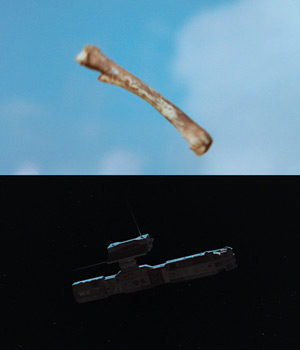
MATCH CUT: The Art of Cinematic Technique from Celia Gómez on Vimeo.
Material below was adapted from the 2019 IB Film Teacher Support Material
Project Description
- Although transitioning from one shot to another is often considered the job of the editor, there are times when the cinematographer needs to get the right shot in order to achieve an “invisible” cut.
- Match cuts or walkthroughs can be simple to achieve but they require planning. This is a useful activity to emphasize the importance of why the cinematographer and editor must collaborate in the pre-production phase.
- Complete a one-minute film with a minimum of six shots where the focus is on seamless editing between match cuts.
Resource Films
- Some films to screen in order to inspire this activity could include the following:
- Rope (1948)—Dir. A Hitchcock (entire film)
- The Player (1992)—Dir. R Altman (the opening shot)
- The Graduate (1967)—Dir. M Nichols (some strong examples of match cuts)
Steps
- Research match cuts
- Watch film scenes
- Create a blog post titled, Working on Transitions
- Copy and paste these headings into the post:
- Summary
- Inquiry
- Action
- Reflection
- Complete the Inquiry section
- Complete the Action heading
- Complete film and upload to YouTube as unlisted
- Write what skills/choices you performed/made are observable in the film in the Action section
- Complete the Reflection section
- Complete the Summary section
- Describe the what and why of the project
Evidencing the Role – Cinematographer
Students are likely to generate the following types of evidence for assessing their work in the role of the cinematographer:
- Findings of research on genre, conventions and techniques of influential films
- Notes from collaborations with other production team members such as emails, storyboards, photos, drawings for all three phases
- Notations on scripts, storyboards and shooting schedules
- Shot lists for each scene
- Notes and diagrams from location scouting including consideration of lighting, camera placement and movement
- Notes on test shoots
- Checklists of equipment
- Evidence of planning for new or tricky shots and sequences
- Production notes with evidence of choices made, changes to original planning and any issues that came up during the film shoot
- Notes and reflections after test screening
Required Components
Inquiry
Reflect on watching, discussing, and/or writing about films in preparation for this project
Identify areas of filmmaking that excite and inspire you about this project
With your team, develop filmmaker intentions you would like to achieve through this production work
Selected a film production role
Research/Acquire techniques required to work in this role
Plan for practically exploring the chosen film production role in order to acquire, develop and apply skills, and to fulfill stated filmmaker intentions
Action
Undertake a range of practical production activities in the chosen film production role
Experience working both individually and collaboratively in film activities
Grapple with the skills associated with the film production role
Attempt to effectively fulfill stated filmmaker intentions
Reflection
Make clear links to the identified films and filmmakers that inspired this work
Reflect on explorations and on the impact this learning has had on your understanding of the film production role and the extent to which they fulfilled their filmmaker intentions
 Capital High School